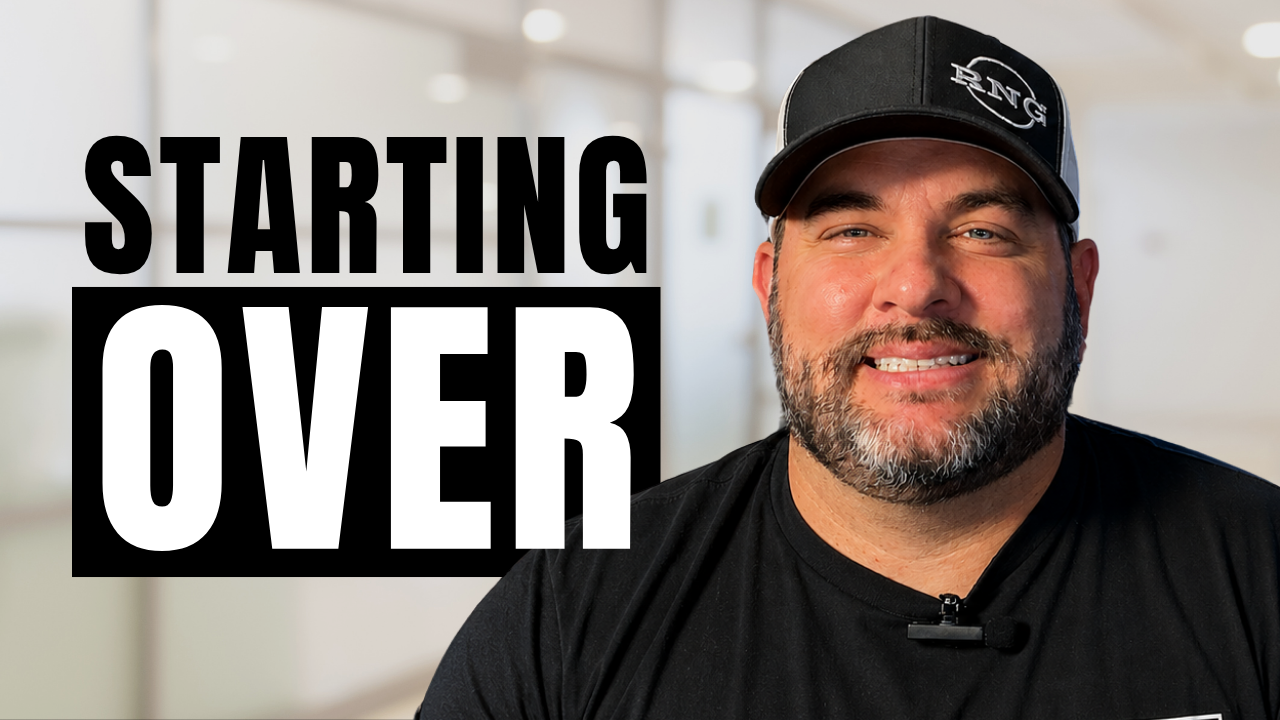
After 20+ years, the list of things that actually moved the needle is a lot shorter than you'd think. Here's what I'd keep, what I'd skip, and what I'd start doing from day one.
I started in real estate as a college intern at Arizona State. I had no clients, no database, no idea what I was doing. I just knew I wanted to be in this business. A mentor took a chance on me, put me under a top team, and I learned by watching people who were better than me at everything.
From there I worked my way through every role this business has. Sales manager. Branch manager. Designated broker for a boutique brokerage with two locations. In 2016, I branched out with a group of handpicked agents to build something of our own. Now, 20+ years later, I run a team and coach agents who are going through the exact same thing I went through.
If I could go back to day one and sit across from that kid, here’s what I’d tell him.
Build the database from day one and here’s how
Before you do anything else, open a CRM. It can be Follow Up Boss, KVCore, even a spreadsheet if you’re bootstrapping. Just pick one and commit. Then start entering every person you know. Your phone contacts. Your social media connections. Your family, your friends, your college roommates, your barber, your mechanic. Everyone.
From that moment forward, every new person you meet goes in the same day. Open house visitor? In the CRM before you leave the property. Phone call with a lead who isn’t ready? In the CRM with a follow-up date. Met someone at a networking event? In the CRM that night with a note about what you talked about.
Tag everyone by category: sphere (people who know you), leads (people who’ve expressed interest), and past clients (people you’ve closed with). Set a recurring reminder to touch your sphere once a month and your active leads once a week. That’s the whole system. It’s not complicated. It’s just consistent. The agents who do this from day one are the ones who have a pipeline by month six while everyone else is still wondering where the business is.
Pick one lead source and here’s what that looks like
The agents who stall out early are usually doing five things at 20% effort instead of one thing at 100%. Pick one lead generation method and give it 90 days of full commitment before you judge whether it works.
If you pick the phone, that means you’re dialing from 9 to 11 every weekday. No email. No scrolling. Just calls. You’re calling your sphere, expired listings, FSBOs, and every contact in your CRM who hasn’t heard from you in 30 days. If you pick open houses, that means you’re hosting every weekend, capturing every visitor’s info on a sign-in sheet, and following up with every single one of them by Monday morning. If you pick social media, that means you’re posting five days a week, responding to every comment and DM within an hour, and creating content that answers real questions people in your market are asking.
Whatever you pick, the system is the same: generate the conversation, capture the person, follow up with value. One source, mastered, will outproduce five sources done halfway.
“Put a tally sheet on your desk. Mark every real conversation. That piece of paper tells the truth about your business faster than any dashboard.”
Find a mentor and actually do what they tell you
I was lucky. I had a mentor early who put me under experienced agents and let me learn by watching. That mentorship shaped everything about how I approach this business today.
Here’s what actually working with a mentor looks like. You don’t just ask for coffee once and call it mentorship. You ask to shadow their listing appointments. You sit in on their phone blocks. You ask them to review your scripts and tell you where you’re losing people. You bring them a specific deal you’re working on and ask how they’d handle it differently. Then you do what they say. Not your version of what they say. What they actually say.
The reason most agents don’t benefit from mentorship isn’t that they can’t find a mentor. It’s that they take the advice, filter it through their own comfort zone, and execute a watered-down version that doesn’t produce results. Then they blame the advice.
Protect your mornings and here’s how to block them
Here’s what a protected morning looks like. 8:00 a.m. to 8:15 a.m., review your CRM dashboard. Know exactly who you’re calling, who needs follow-up, and who has a task due today. 8:15 a.m. to 10:00 a.m., phone block. Calls, texts, video messages to your database. 10:00 a.m. to 10:15 a.m., break. 10:15 a.m. to 11:00 a.m., follow-up on yesterday’s conversations, send market updates, schedule appointments.
During that block, your email is closed. Your social media is closed. Your phone notifications are off. If someone needs you for a transaction issue, they can wait until 11:00 a.m. The agents who struggle most are the ones who start their morning in their inbox and never get out. By the time they look up, it’s 2:00 p.m. and they haven’t had a single conversation that could generate a deal.
Track conversations, not closings
Closings are a lagging indicator. By the time you see the number, the work that created it happened 60 to 90 days ago. If you’re only tracking closings, you’re driving by looking in the rearview mirror.
Here’s what I have my agents track daily: how many real conversations did you have today with someone who could buy or sell in the next 12 months? Not dials. Not texts. Conversations. A real back-and-forth where you learned something about their situation.
The target I give new agents is five per day. That’s 25 a week. That’s 100 a month. If you’re having 100 real conversations a month with people who could transact in the next year, your pipeline fills itself. If that number drops below three a day for more than a week, your production 90 days from now is already in trouble. Put a tally sheet on your desk. Mark every real conversation. That piece of paper tells the truth about your business faster than any dashboard.
Be okay with being bad at first
This is the one I wish someone had said to every new agent out loud on their first day. You’re going to be bad at this in the beginning. That’s not a sign you’re in the wrong business. That’s a sign you’re in the early part of a business that rewards people who stay long enough to get good.
Here’s what “getting good” actually looks like. You practice your listing presentation out loud in your car until you can deliver it without looking at your notes. You roleplay objection handling with a partner three times a week until “I want to think about it” doesn’t freeze you anymore. You record yourself on a prospecting call, listen back, and cringe, and then do it again tomorrow slightly better. The agents who break through year two aren’t the ones who were naturally talented. They’re the ones who practiced more than everyone else and didn’t quit when it felt awkward.
What I’d keep exactly the same
The mentor. The team. The decision to branch out and build something of my own. The belief that relationships matter more than transactions. The willingness to pick up the phone when I didn’t feel like it.
Those are the things that built everything I have today. They’d build it again if I had to start from zero tomorrow.
If you’re early in your career and you want someone in your corner who’s been through every stage of this business, I’d love to have that conversation. Call or text me at (602) 502-6468, email me at bret@rngaz.com, or visit bettertogetheragents.com. The beginning is hard. It doesn’t have to be lonely.


